A NEW WORLD THROUGH THE CONTINENTAL LENS
VASTOGG reviews the various global fundamentals to design effective solutions. In this blog we review the various continental facts and realities.
Africa
Size
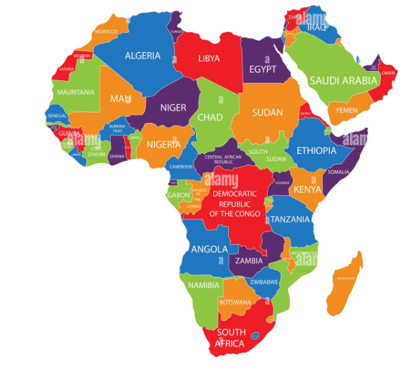
Africa has a total of 54 countries, the most of any continent. Arica’s total land area is approximately 11,724,000 square miles (30,365,000 square km), and the continent measures about 5,000 miles (8,000 km) from north to south and about 4,600 miles (7,400 km) from east to west.
Africa is the second largest continent (after Asia), covering about one-fifth of the total land surface of Earth. The continent is bounded on the west by the Atlantic Ocean, on the north by the Mediterranean Sea, on the east by the Red Sea and the Indian Ocean, and on the south by the mingling waters of the Atlantic and Indian oceans.
Population
As of November 2024, the population of Africa is 1,526,899,688, which is 18.3% of the world's population. Africa's population is growing rapidly, with an increase of about 100 million every three years. The population density is 51 people per square kilometer, and the median age is 19.2 years.
Economy
Africa contains an enormous wealth of mineral resources, including some of the world’s largest reserves of fossil fuels, metallic ores,gems and precious metals. This richness is matched by a great diversity of biological resources that includes the intensely lush equatorial rainforests of Central Africa and the world-famous populations of wildlife of the eastern and southern portions of the continent. Although agriculture (primarily subsistence) still dominates the economies of many African countries, the exploitation of these resources became the most significant economic activity in Africa in the 20th century.
• Africa's GDP is estimated to be $3.1 trillion in 2023, with a GDP growth of 3.7%. The GDP per capita is estimated to be $1,740.
• Africa's GDP is ranked 5th in the world in nominal terms and 4th in PPP terms
• The countries with the highest GDP in Africa are South Africa, Egypt, Algeria, and Nigeria.
• The African Economic Outlook 2024 predicts that Africa's GDP growth will increase to 3.7% in 2024 and 4.3% in 2025.
Key Challenges
Africa faces diverse challenges but mainly
• Climate change
• Food security
• Conflict
• Fragile economy
Asia
Size
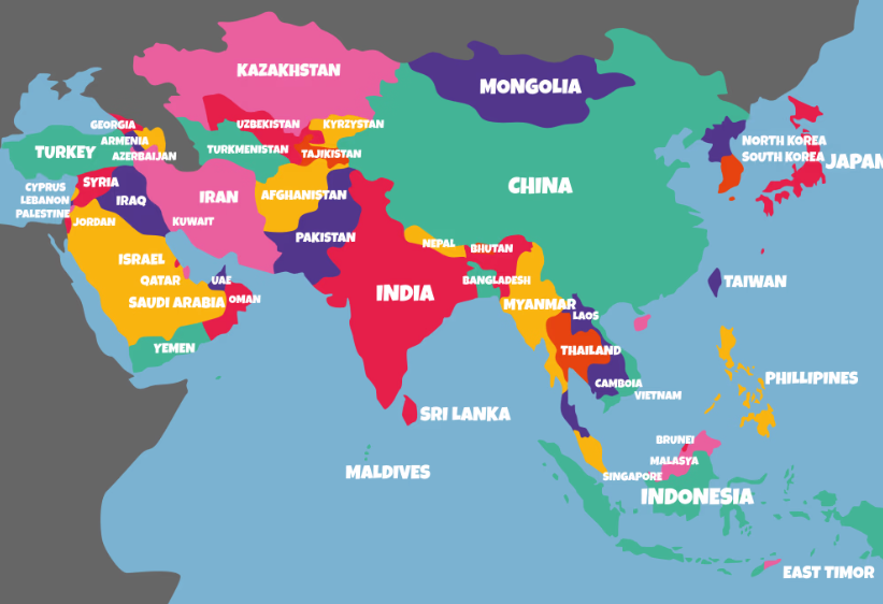
Asia measures approximately17,226,200 square miles (44,614,000 square km), roughly one-third of the land surface of Earth. Asia has the second-highest number of countries of any continent. The United Nations recognizes 49 countries in Asia, which is the most widely accepted number. However, depending upon which territories one recognizes and which intercontinental countries one includes, Asia could be said to have as few as 45 or as many as 53 countries.
Population
Asia's population is about 4.7 billion people, which is 60% of the world's population. By 2050, the population is projected to increase to 5.2 billion. The most populous country in Asia (and the world) is China, which has more than 1.4 billion people.
Economy
According to the International Monetary Fund, Asia's GDP is estimated to be $38,435 billion in 2023, making it the world's richest continent. China is Asia's largest economy with a GDP of over $18 trillion. Other major Asian economies include Japan, India, and South Korea
Key Asia Challenges
Economic challenges
Asia and the Pacific are experiencing weaker purchasing power, lower job opportunities, and increased income and gender inequality. The region is also facing geopolitical tensions, trade fragmentation, and uncertainty around monetary policy.
Labor market challenges
The region is facing demographic challenges, including an aging population. The labor market is also being affected by new technologies like artificial intelligence (AI) and industrial robots.
Geopolitical tensions
The region is facing a shifting balance of power, territorial conflicts, and the territorial dispute.
Environmental Challenges
Climate change, combined with rapid population growth and urbanization, are placing intense pressure on Asia’s most precious resources.
EUROPE
Size
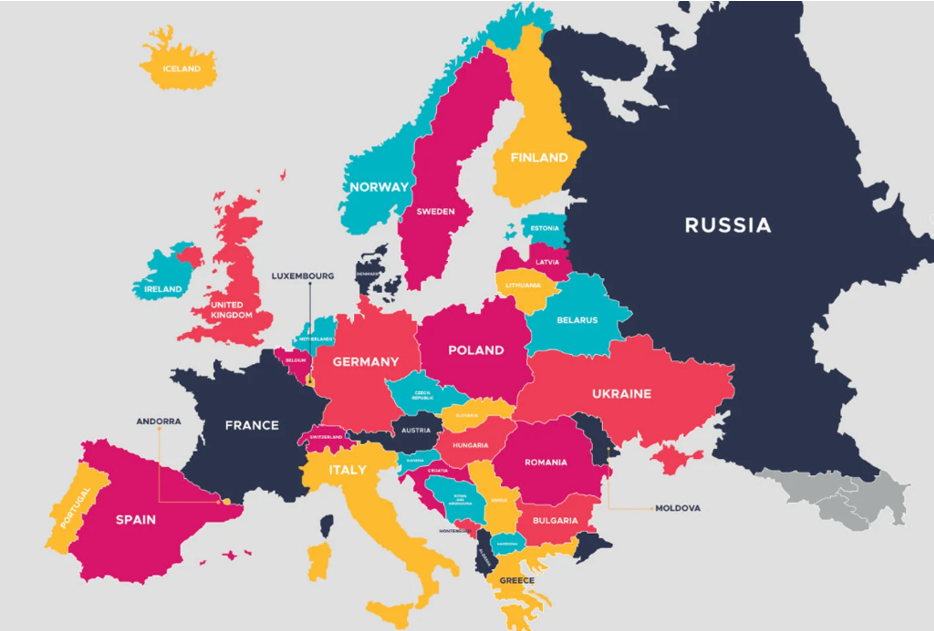
Europe is the second smallest of the world’s continents, composed of the westward-projecting peninsulas of Eurasia (the great landmass that it shares with Asia) and occupying nearly one-fifteenth of the world’s total land area. Europe has 51 independent U.N.-recognized states. The largest country by both population and land area is Russia with 145.93 million people and spanning over 6.6 million square miles (17.125 million square kilometers). Russia, Armenia, Kazakhstan, Azerbaijan, Georgia, and Turkey are considered to be transcontinental countries, meaning that they are considered to be parts of both Asia and Europe.
Population
As of 2023, the population of Europe is 448.8 million people. The population density of Europe is 34 people per square kilometer. The most populated countries in the European Union (EU) are Germany, France, Italy, Spain, and Poland. The least populated countries in the EU are Malta, Luxembourg, and Cyprus.
Economy
The GDP of Europe is estimated to be $36,732 billion, according to the International Monetary Fund (2023). This makes Europe the third-ranked continent by GDP, after Asia and North America. Europe's largest national economies by nominal GDP over US$1.0 trillion are: Germany ($4.43 trillion), United Kingdom ($3.33 trillion), France ($3.05 trillion), Italy ($2.19 trillion), Russia ($1.86 trillion), Spain ($1.58 trillion), Netherlands ($1.09 trillion).
Europe’s Most Pressing Challenges
Environmental issues
Europe consumes more resources and contributes more to environmental degradation than other regions. These issues include biodiversity loss, climate change, and resource use.
Demographic challenges
Some demographic challenges facing Europe include Population aging, Shrinking working-age population Labor shortages, Migration and integration, Declining fertility rate.
Declining Competitiveness
Europe faces challenges in remaining competitive. Europe invests less than China and the US, Energy costs in Europe are higher than competitors. Bureaucracy: Regulations can hinder investment. Labor market: People work less in Europe than elsewhere. Innovation: Europe's share of global patents is decreasing.
North America
Size
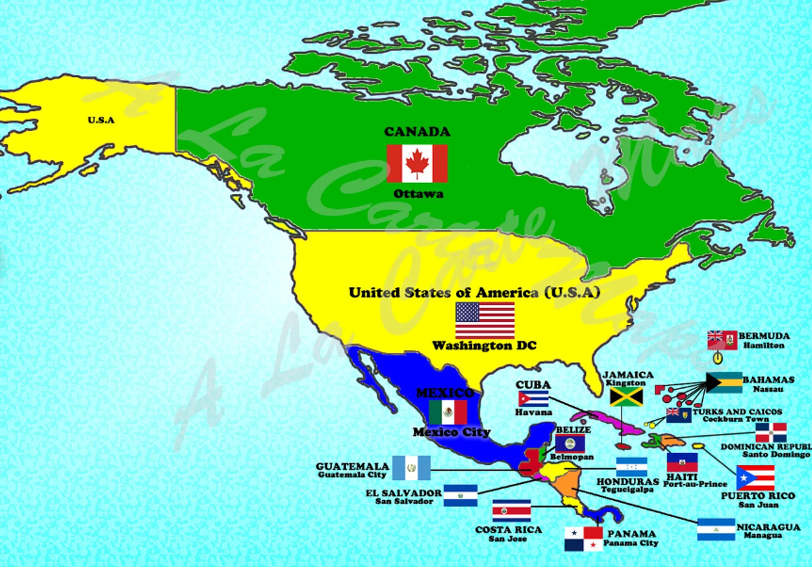
North America is made up of 23 countries and nearly as many territories. The most populated of these countries is the United States, which has a population of 329.9 million people. The largest country in North America by land area is Canada, which spans over 3.855 million square miles (9,984,670 square kilometers). Canada and the United States together occupy 79% of the continent’s total land area.
Population
As of 2021, North America's population was estimated at over 592 million people in 23 independent states, or about 7.5% of the world's population.
Economy
According to the International Monetary Fund (IMF), the GDP of North America is estimated to be $31,603 billion in 2023. This makes North America the second highest GDP in the world, behind Asia, which is estimated to have a GDP of $38,435 billion
Key Challenges
North America is facing major challenges in the areas of, Anti-Corruption and Transparency. Arms Control and Nonproliferation. Artificial Intelligence (AI), Climate and Environment, Climate Crisis., Combating Drugs and Crime, Countering Terrorism, Cyber Issues.
Oceania and Australia
Size
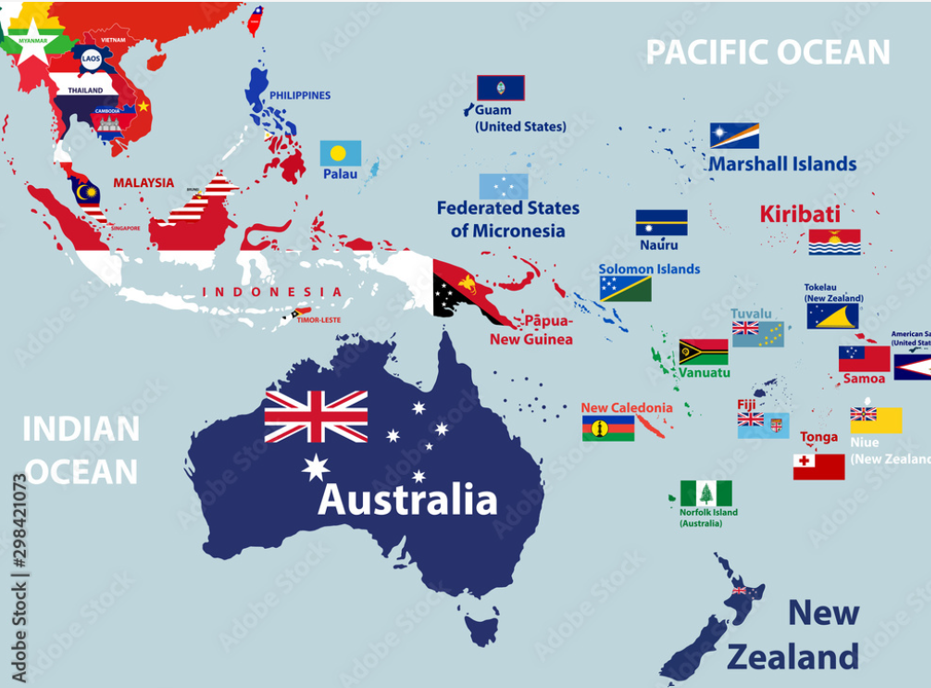
Oceania has 14 countries and many overseas dependent territories. The largest country by population and land area is Australia, which is home to 25.63 million people and has 2.97 million square miles (7,692,024 square kilometers) of area. Oceania also boasts a large number of territories, many of which are controlled by the United States.
Population
As of 2024, the population of Oceania is 46,266,118. Oceania population is equivalent to 0.56% of the total world population. Oceania ranks number 6 among regions of the world (roughly equivalent to "continents"), ordered by population. The largest and most populous country in Oceania is Australia, and the largest city is Sydney.
Economy
According to the International Monetary Fund, Oceania's GDP in 2023 is estimated to be $1,979 billion, making it the sixth largest continent in terms of GDP. Australia is the richest country in Oceania, with a per capita Gross National Income (Purchasing Power Parity) of $66,260. New Zealand is the second richest country in Oceania, with a per capita Gross National Income (Purchasing Power Parity) of $52,750.
Climate Change
Small island states in Oceania are at high risk of displacement due to climate change. Disasters like droughts, volcanic eruptions, and tropical cyclones cause havoc and displacement. Rising sea levels and coastal erosion also threaten Pacific island states, as half of their population lives within 10 kilometers of the coast.
Economic independence
Improving ports, airports, and roads can help Oceania achieve economic independence.
Political instability
Political instability and lack of security can hinder investment and the development of institutions.
Environmental protection and resources management
Oceania faces challenges with environmental protection and resources management.
Education and health care
Oceania faces challenges with education and health care.
South America
Size
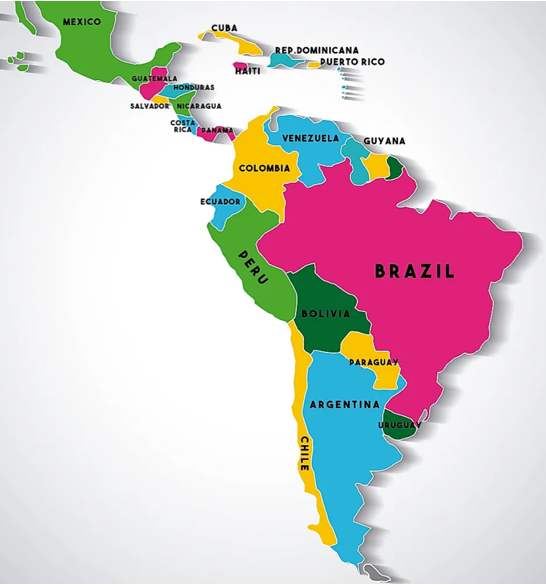
South America has 12 independent nations and a handful of dependent territories. South America has an area of 17,840,000 square kilometers (6,890,000 sq mi). The largest country in South America by population and land area is Brazil, which has about 211 million people and spans over 3.288 million square miles (8,515,7767 square kilometers). Brazil is also the country that contains the largest portion of the Amazon rainforest.
Population
As of November 2, 2024, the population of South America is 436,456,193, which is 5.34% of the world's population. The population density is 25 people per square kilometer (65 people per square mile).
Economy
South America's GDP is estimated to be $4.04 trillion in 2023. In 2024, South America's GDP per capita is estimated to be $9.72 thousand in current prices, and $21.57 thousand in purchasing power parity. In 2024, South America's share of the world's GDP based on PPP is estimated to be 4.82%.
Key Challenges of South America
South America faces many challenges, including:
• Poverty rates are high, and the middle class is shrinking.
• Drug trafficking is a major part of the informal economy, and cartels are a serious security threat.
• Economic growth has slowed, and taxes on productive investment are high.
• Pollution, such as plastic in the sea, harms aquatic animals.
• The quality of education is poor, and there is a slow transfer of knowledge.
• South America faces challenges from climate change.
• South America's 12 countries are culturally and linguistically similar, but political unity is difficult.
ANTARCTICA
Size
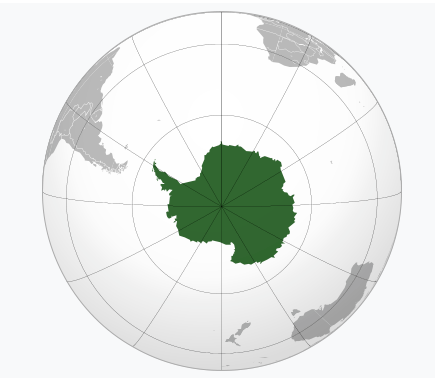
There are technically no countries on the continent of Antarctica. However, seven sovereign states have territorial claims in Antarctica.
Antarctica is Earth's southernmost and least populated continent. Situated almost entirely south of the Antarctic Circle and surrounded by the Southern Ocean (also known as the Antarctic Ocean), Antarctica is, on average, the coldest, driest, and windiest of the continents